Heads up: this post contains affiliate links. If you buy through them, I may earn a small commission at no extra cost to you. As an Amazon Associate I earn from qualifying purchases. Full disclosure.
The short version: if your Pit Boss temperature keeps dropping and won’t come back up, the fire has probably gone out while the auger keeps feeding pellets. Pull the food, turn the grill off and unplug it, take out the grates and heat shield, clear out the burn pot, restart it with everything still out until it’s smoking, then put it all back. It takes me about 2 or 3 minutes once I catch it.
I’ve had my Pit Boss for about six years and I’ve had good luck with it overall. But every now and then, maybe 5 to 10 times total, the fire has gone out halfway through a cook. It’s not dangerous if you handle it right, but it’s a pain, and the longer it goes before you notice, the bigger the mess. Here’s what it looks like, what I think causes it, and exactly how I fix it.
What a Flameout Looks Like
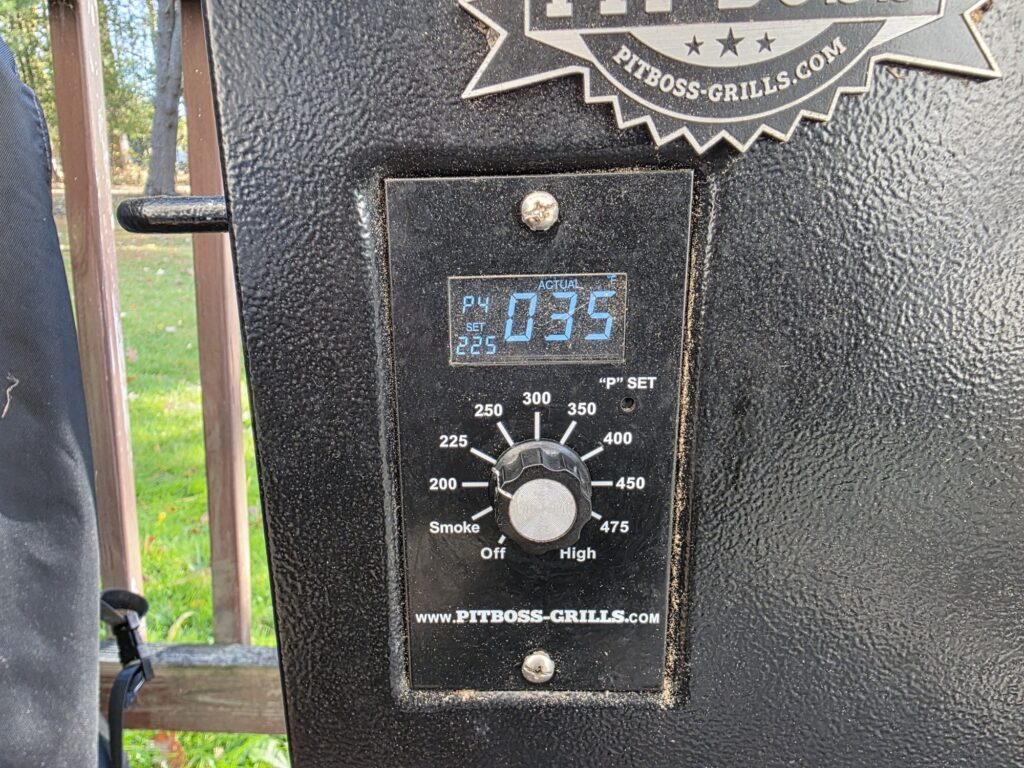
There’s no alarm and no error message on my 440. The only sign is the temperature. I’d set it to 225°F, go out to check, and the actual temp would be 200. Then 190. Then 180. It just keeps dropping.
Here’s the problem: the controller thinks the grill needs more heat, so the auger keeps feeding pellets into a burn pot that isn’t burning anything. The longer it goes, the more pellets pile up. A couple of times I caught it early and the burn pot was just full of unburned pellets. Other times it was mounded right over the top.
The quicker you notice, the easier the fix. If you’re doing a long cook, check the actual temp on the control panel every time you walk by, or let a wireless thermometer watch it for you (more on that at the end).
When It’s Happened to Me
Mostly on longer cooks, the multi-hour ones. I’ve dealt with it on a brisket and on a pork butt. But I’ve also had it happen once on a ham, which is only a 1 to 2 hour cook, so it can happen on anything.
It wasn’t a weather thing for me either. None of those days were especially cold or windy.
What Causes It (My Best Guess)
I’m honestly not positive, but my best guess is ash buildup in the burn pot. When ash piles up, the pellets can’t get enough air to keep burning, so I think a lot of it comes down to how clean the grill is.
Other causes people commonly point to, from what I’ve read:
Damp or old pellets. Wet pellets swell, crumble and don’t light well. This hasn’t been my problem. I keep my pellets outside under a tarp and they’ve been fine, even in the winter.
Running low on pellets. If the hopper runs dry or the pellets bridge (hang up instead of sliding down to the auger), the fire starves.
The P setting on Smoke mode. More on that below.
How to Fix a Pit Boss Flameout, Step by Step
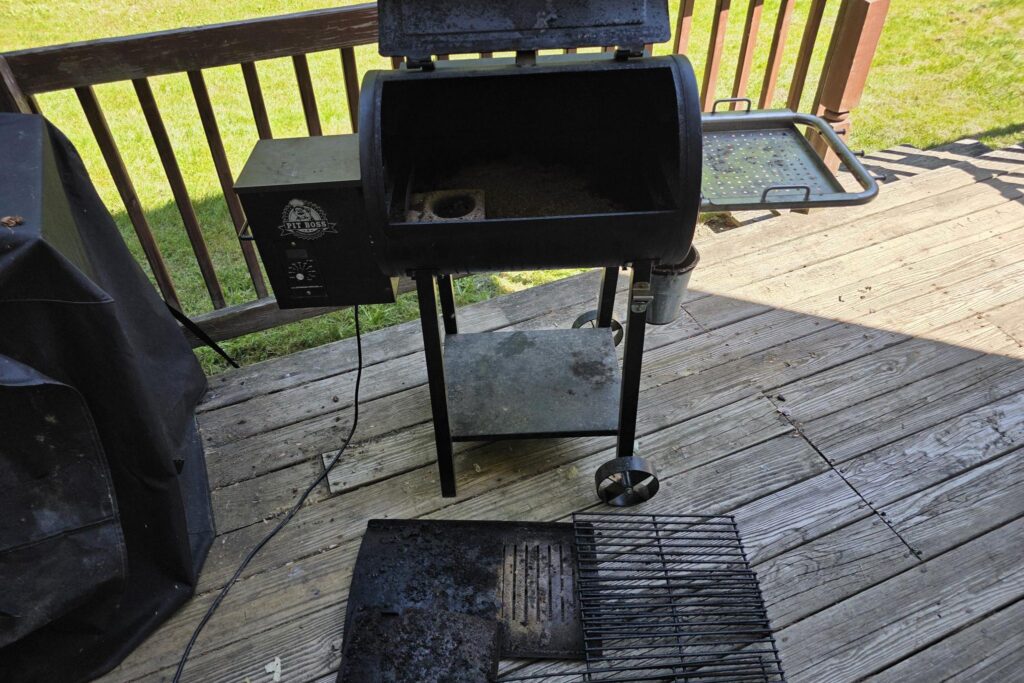
I never had a camera out the times this happened (I was a little busy saving dinner), so some of these photos are from my regular cleaning. It’s the same parts and the same process.
1. Get the food off and set it close by
I have a little setup right next to the grill, so I put the meat as close as I can. You want to get it back on as fast as possible so it doesn’t cool down too much. Set the parts down close by too, so it all goes back together quickly.
2. Turn it off and unplug it
Turn the grill off so the igniter rod and the auger aren’t running while your hand is in there. I go one step further and unplug it, because even with it turned off I can still hear the motor going. I don’t know if that does anything, but for safety I’d rather it have no power at all.
3. Take out the grates and the heat shield
Pull the cooking grates, then the heat shield (Pit Boss calls it the flame broiler) to get at the burn pot. If you’re not sure which part is which, my Pit Boss cleaning guide has a breakdown of every part.
4. Clear out the burn pot
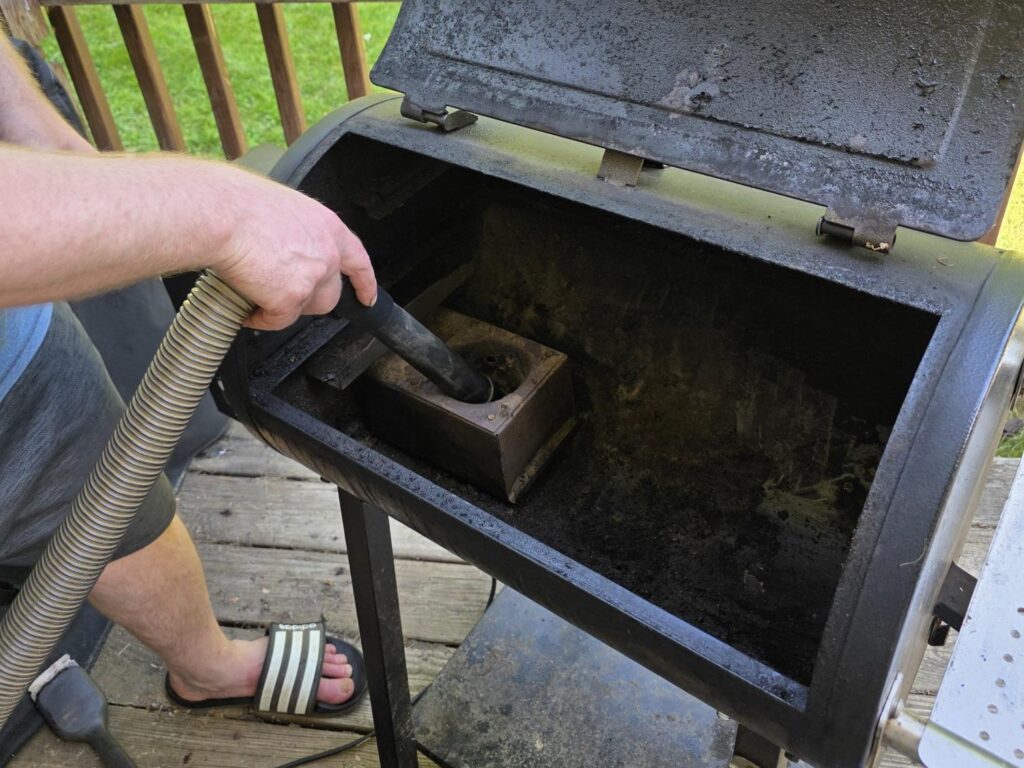
This is where you’ll find the pile of unburned pellets. Be careful and make sure nothing’s still hot before you reach in. I’ve just used my hand, slowly, but a utensil or a small scoop is easier if there’s a lot.
The unburned pellets are perfectly fine. I put them right back in the hopper.
Then get the ash out of the bottom of the burn pot. I blew mine out, since I figured the ash might be part of the problem. A shop vac works great too and is what I use when I do a full cleaning.
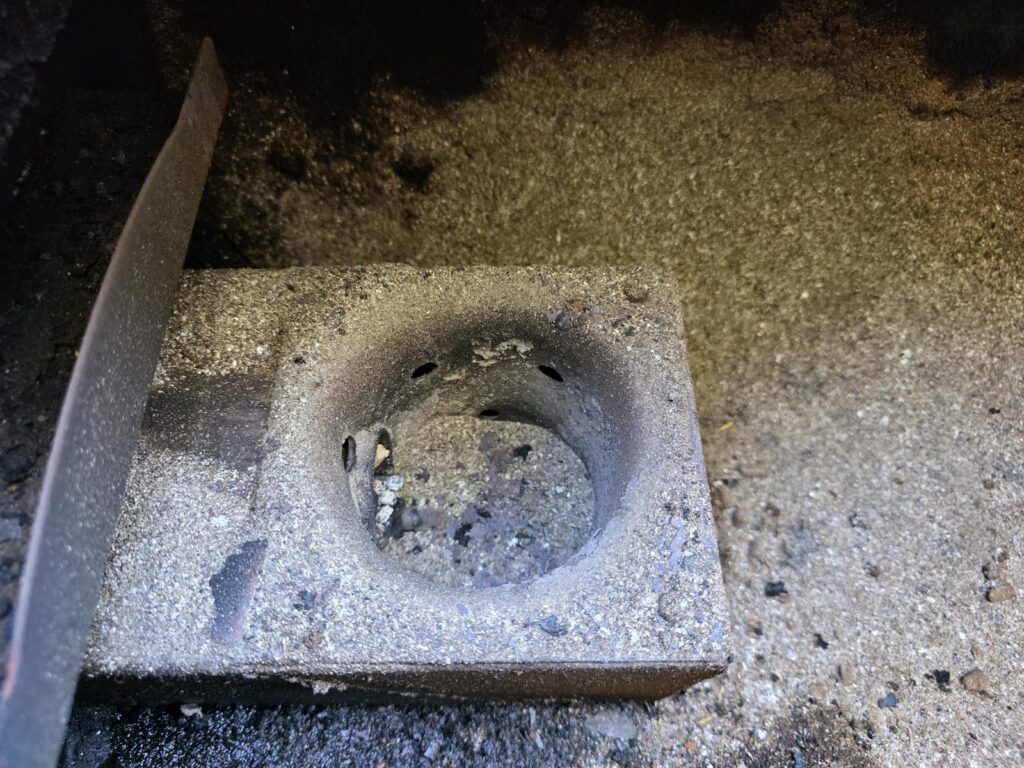
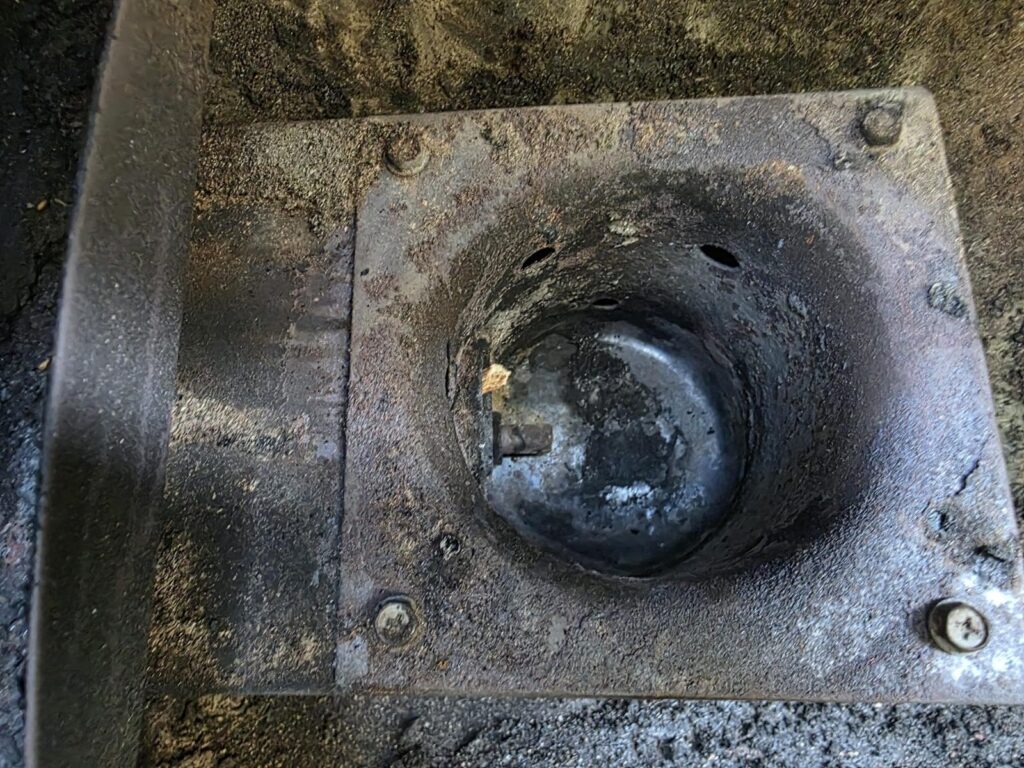
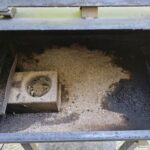
You want it completely cleared out, like this, before you restart:
Don’t skip this step. Restarting on a burn pot full of unburned pellets can cause a big flare-up when everything catches at once. Always clear it out first.
5. Restart it before you put everything back
Plug it back in and start it up with the grates and heat shield still out. That way you can see what’s happening. Watch for the pellets to come in, the igniter to do its job, and smoke to start. Once it’s lit and smoking, put the heat shield and grates back in and get your food back on.
The whole clean-out only takes me about 2 or 3 minutes. It depends on how many pellets you have to dig out, which is one more reason to catch it early.
How I Try to Keep It From Happening
Mostly, I try to be more diligent about keeping it clean, because dealing with a flameout mid-cook is a pain in the butt. I try to stick to the maintenance schedule from my Pit Boss cleaning guide. For this problem, the big one is vacuuming out the burn pot every 3 to 5 cooks.
If you want the cleaning schedule on paper, I made a printable version you can stick on the garage wall:
What About the P Setting?
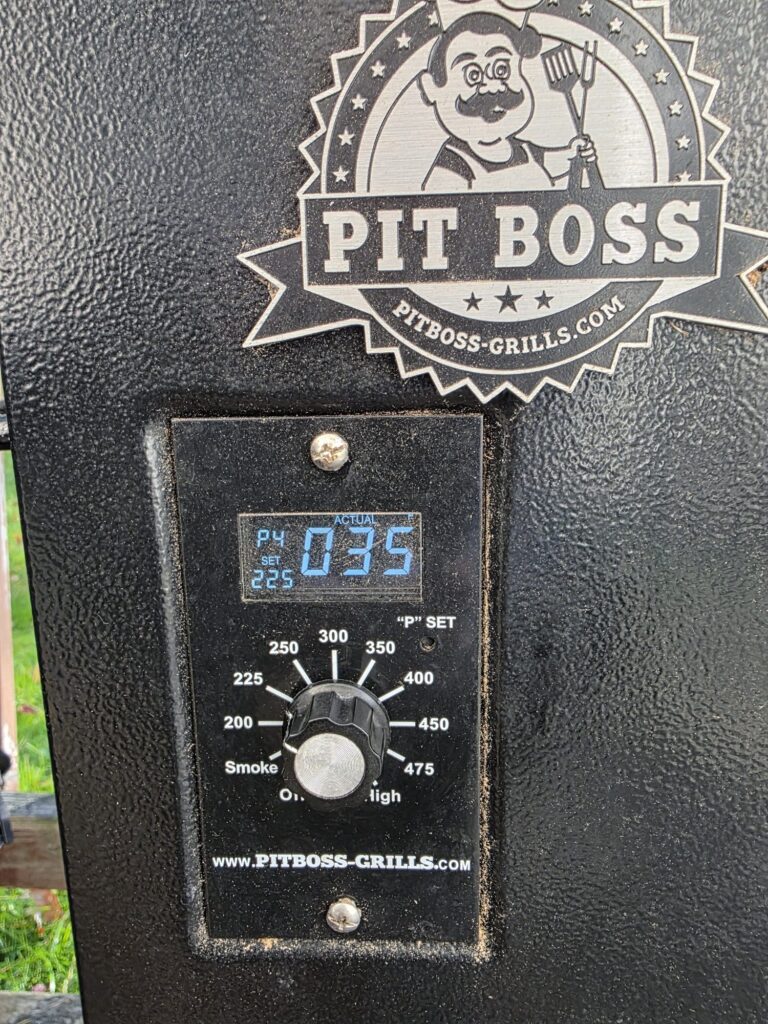
You’ll see the P setting come up a lot when people talk about Pit Boss flameouts, so here’s what I’ve learned reading up on it. I haven’t adjusted mine myself. It’s still on the default, P4.
It only works on the Smoke setting. When you dial in a temperature like 225°F, the controller manages the pellet feed itself, so the P setting doesn’t come into play. That means it had nothing to do with my flameouts, which were all at a set temperature.
Higher P number = longer pause between pellet feeds. That gives you a cooler fire and more smoke, but if the pause is too long on a cold day, the fire can go out.
Lower P number = more pellets, hotter fire. If you get flameouts on the Smoke setting, lowering the P number is the usual advice.
To change it, there’s a small “P” SET button on the control panel. I’d check your owner’s manual for your model, since some newer Pit Boss grills don’t have it.
Pit Boss Flameout FAQ
Why did my Pit Boss fire go out but the auger is still feeding pellets? The controller only knows the temperature is too low, so it keeps feeding pellets to try to heat back up. It doesn’t know the fire is out. That’s why the burn pot fills up.
Does the Pit Boss give an error code for a flameout? Mine never has. The only sign has been the actual temperature dropping further and further below what I set.
Is it safe to just turn it back on? Not with a burn pot full of pellets. Clear it out first, or you risk a big flare-up when it relights.
Can I reuse the unburned pellets? If they’re dry and in good shape, yes. I put mine right back in the hopper.
Final Thoughts
A flameout isn’t the end of your cook. Once you’ve dealt with one, it’s a 2 or 3 minute fix. A few things to think about:
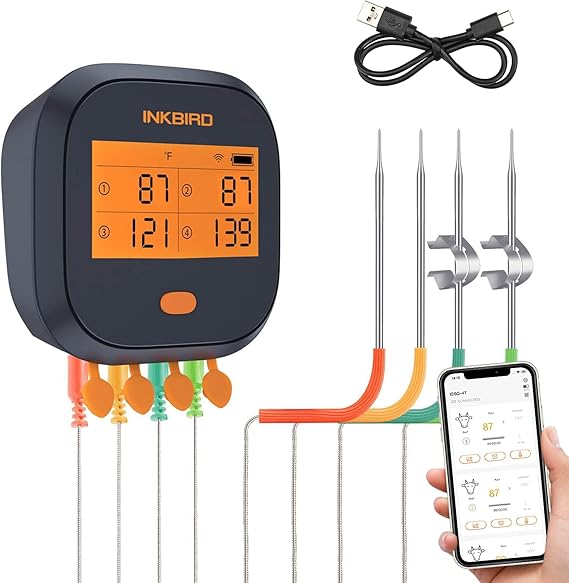
Watch the pit temp on long cooks. Since the grill has no alarm, you need another way to catch it. I use my Inkbird IBBQ-4T: it has four probes, so one goes in the meat and I leave another one out of the meat, just sitting in the smoker, to read the temperature inside. I can check it from my phone, it’s more accurate than the thermometer built into the smoker, and you can set high and low temperature alarms, so if the pit starts dropping you get a heads-up instead of finding out an hour later. One catch on mine: the alarm only goes off on the base unit by the grill, not on my phone, so you need to be close enough to hear it.
Keep the burn pot clean, especially before a long cook. My best guess is that’s what prevents it.
Have a spot ready next to the grill for the food and parts, so you can move fast.
Getting a different error code instead? If your Pit Boss is running too hot rather than going out, check my Pit Boss ErH error guide.
🔥 So fire up the pit, and let’s grill and chill.
Tools & Gear I Use
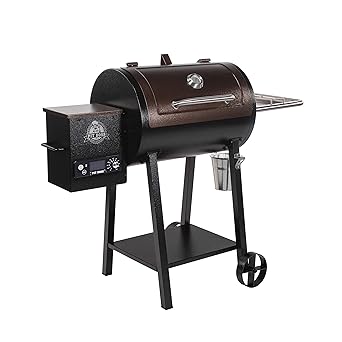
Pit Boss Pellet Smoker Six years and still my workhorse
Competition Blend Pellets What I run most of the time
Inkbird IBBQ-4T Keep an eye on temps without babysitting the pit
Heavy-Duty Gloves For pulling grates and digging out the burn pot