ErH on your Pit Boss means the grill is overheating. The control board read a cooking chamber temperature above its safe limit and shut things down to protect the unit. It is a safety feature doing its job, not a sign your smoker is broken. The most common cause by far is a grease fire, followed by too many pellets in the burn pot. In most cases a thorough clean of the burn pot and everywhere grease collects clears it for good.
If your grill is showing ErH right now and you have meat on it, skip ahead to the emergency steps below. Everything else can wait until things cool down.
Right Now: What To Do First
Work through these in order.
- Look for flames. Open nothing yet. If you can see fire through the vents or smoke is pouring out dark and greasy, you have a grease fire.
- If it is a grease fire, keep the lid closed. Closing the lid starves it of oxygen. Turn the grill off and unplug it. If you need to knock down flames, use kosher salt or baking soda. Never use water on a grease fire. Water will spread burning grease instead of putting it out.
- If there are no flames, power down normally. Turn the unit off, let it run its shutdown cycle if it will, then unplug it.
- Walk away and let it cool completely. Not warm. Cool. You are going to be putting your hands inside the barrel.
- Then clean it out. Details below.
Your meat is probably fine, by the way. A brief temperature spike is not going to ruin a pork butt. Get the grill sorted, then worry about the cook.
What ErH Actually Means
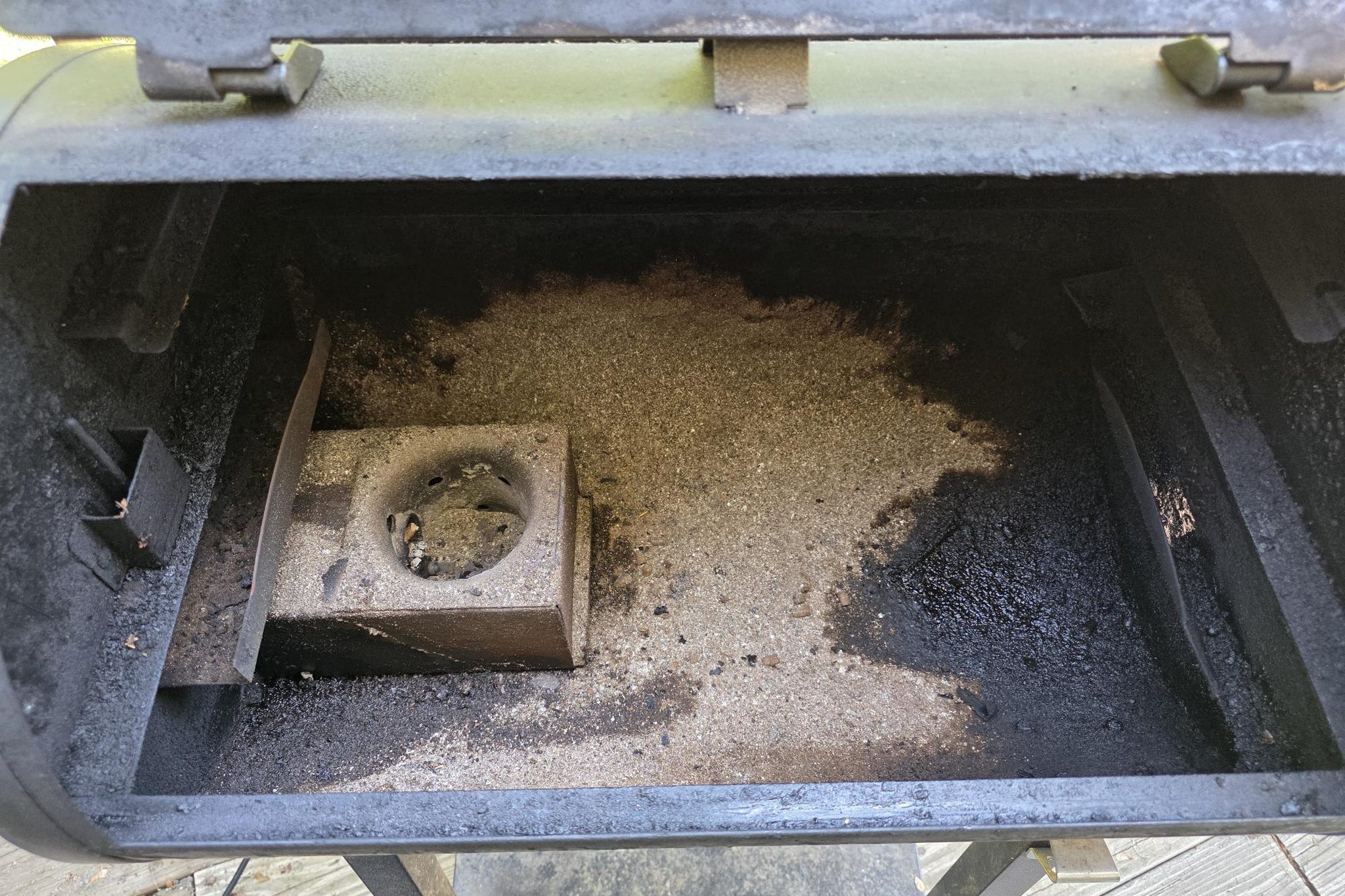
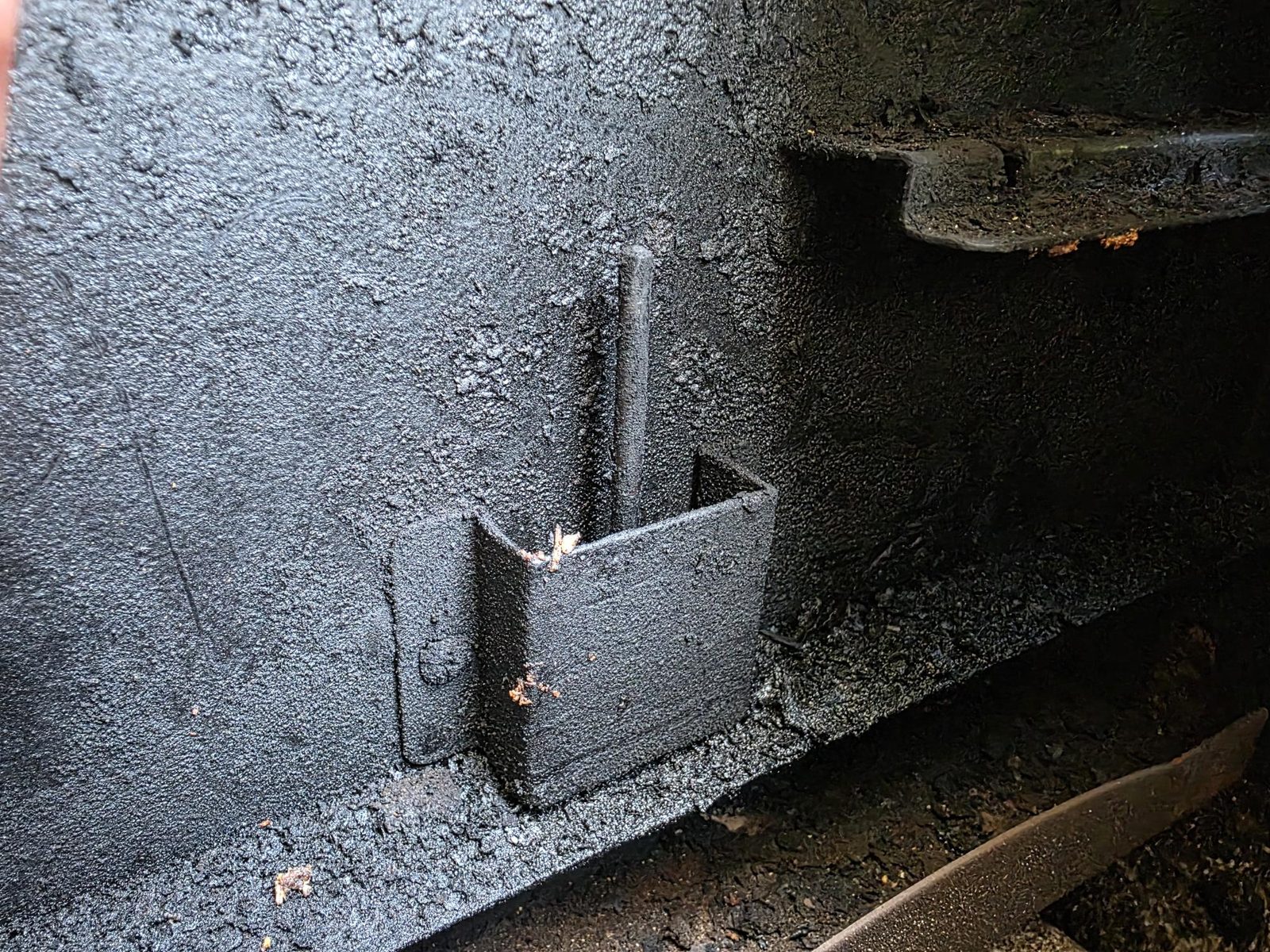
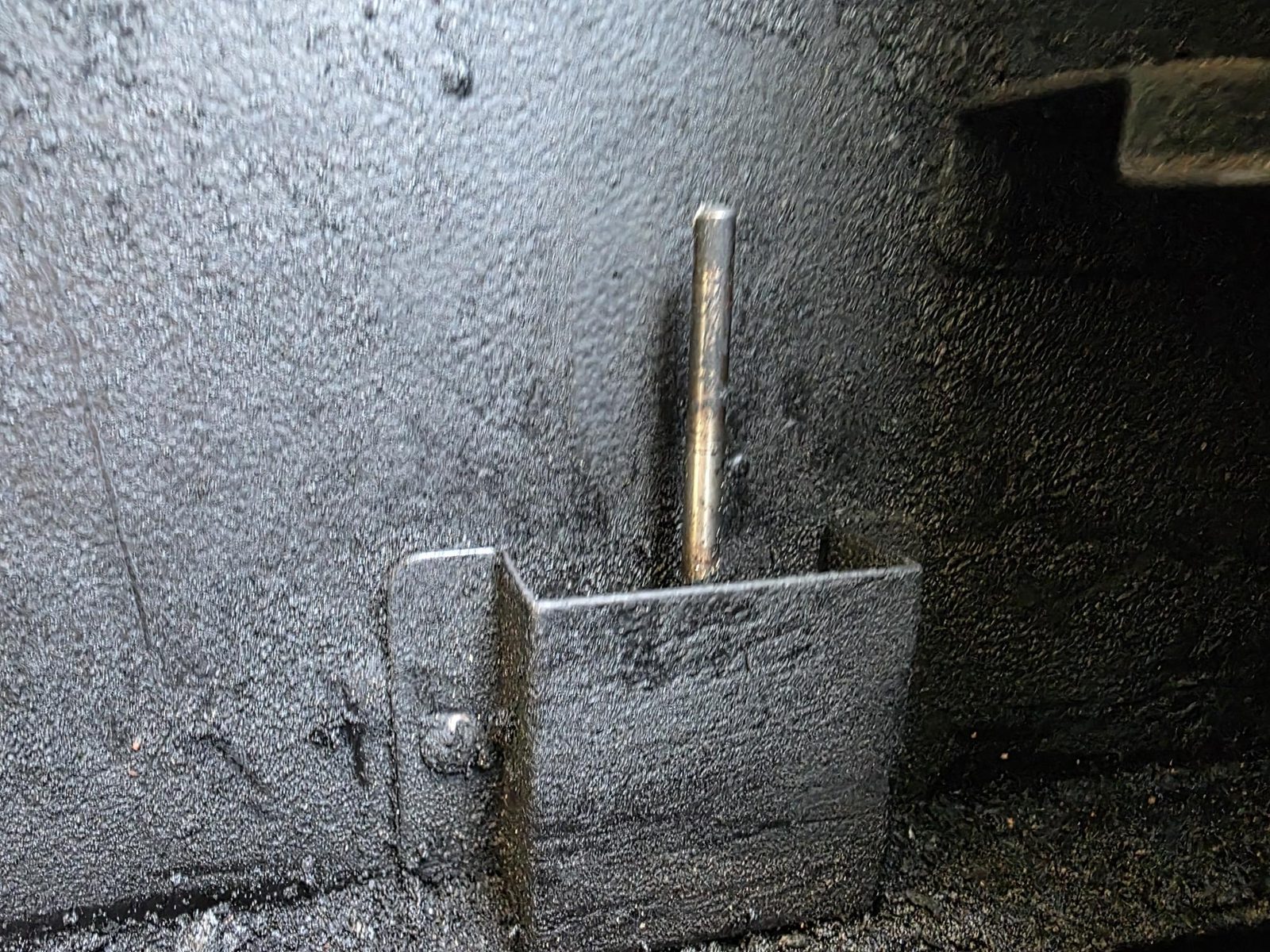
ErH is short for “error, high temperature.” Your Pit Boss has an RTD temperature probe mounted on the inside wall of the cooking chamber. On mine it sticks out from the left hand wall, a short metal pin standing up out of a small bracket. That probe is what the controller uses to hold your set temperature. When the reading from that probe climbs past a threshold programmed into the control board, the board triggers overheat protection and displays ErH.
Here is something worth knowing that most articles on this gloss over: there is no single published temperature that triggers ErH. The threshold is set in the control board firmware and it varies depending on which grill you own. A horizontal pellet grill routinely runs above 500°F when you are searing, so its ceiling has to sit well above that. A vertical pellet smoker is generally not built to go past 400°F, so its ceiling is much lower.
That is why you will see people online swear ErH triggers at one specific number and then someone else reports it at a completely different one. They both own a Pit Boss. They do not own the same Pit Boss. If you want the number for your unit, your model’s manual is the only place to find it, and plenty of manuals do not list it at all.
How ErH Differs From the Other Error Codes
It helps to know what ErH is not, because the fixes are completely different:
| Code | What It Means | Usual Culprit |
|---|---|---|
| ErH | Too hot, overheat shutdown | Grease fire or excess fuel |
| Er1 / ErL | Probe not making a connection | Loose or damaged RTD wiring |
| Er2 | Fire never got established at startup | Igniter or pellet feed |
| Er3 | Fire went out mid cook | Out of pellets or auger jam |
The useful distinction is that Er1 points at the probe itself, while ErH usually reflects genuine excess heat. That is not a hard rule, and I will get to the exception further down, but it is the right starting assumption.
Straight Talk Before We Go Further
I have been cooking on a Pit Boss for years and I have never personally thrown an ErH code. I would rather tell you that up front than pretend otherwise.
What follows is pulled from Pit Boss troubleshooting documentation and from owners who have actually worked through this on their own grills.
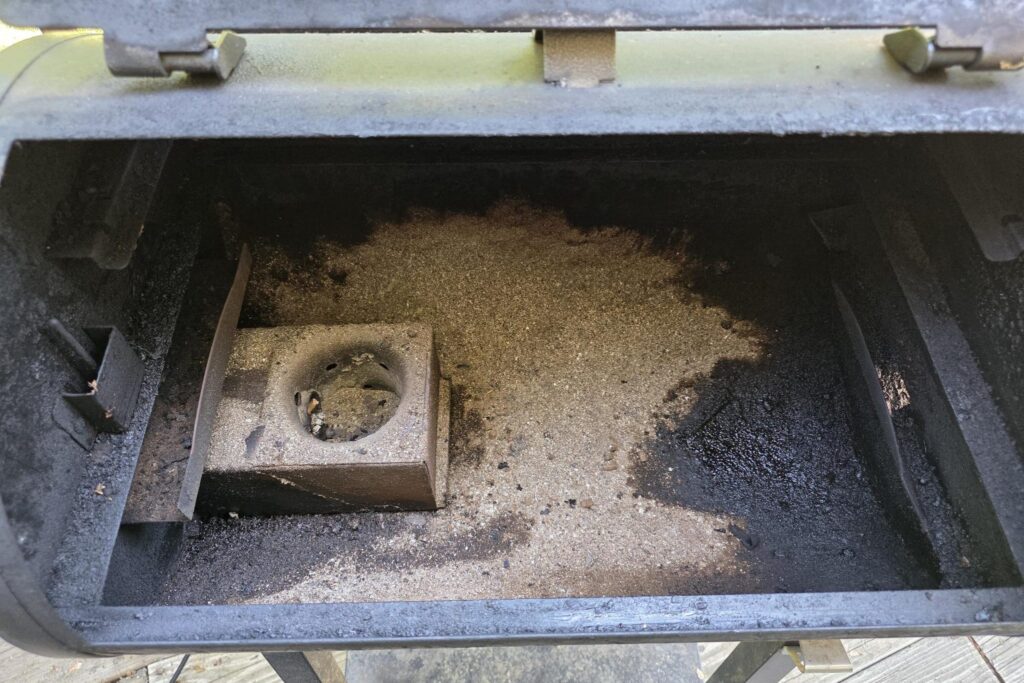
What I can speak to firsthand is the grease side of it. I stay on top of the regular cleaning, but I skipped my start of season deep clean this year, and the difference was obvious the moment I pulled the grill apart. Noticeably messier than usual, and a longer job because of it.
I have never had an ErH code. Grease is the most common cause of this error and it is the one part genuinely within your control, so if there is a lesson from my own grill it is that the deep clean you skip is the one that catches up with you.
What Causes ErH, Ranked By Likelihood
1. A Grease Fire (The Most Common Cause By Far)
This is the one. If you are seeing ErH, start here.
Every fatty cook you do leaves something behind. Pork butt, brisket, bacon weaves, chicken thighs with the skin on. The fat renders, runs down the drip tray, and collects in the grease channel and the bucket. Do that enough times without cleaning and you have a layer of flammable residue sitting directly above a fire pot.
Eventually it lights. When it does, chamber temperature spikes hard and fast, the RTD reads it, and the board shuts you down. The error code is the symptom. The grease is the disease.
If you have recently run a few back to back fatty cooks and have not cleaned in between, you have found your answer.
2. Too Much Fuel in the Burn Pot
The burn pot is sized for a certain amount of fuel. Overload it and you get a bigger fire than the controller planned for.
This happens most often after a failed startup. The auger keeps feeding, the pellets do not light, and you end up with a pot packed full of unburnt fuel. Then it catches all at once. If you have had a startup fail and immediately tried again without emptying the pot first, that is a strong candidate.
Old pellets that have absorbed moisture also burn unpredictably. If your bag has been sitting open in a humid garage since last summer, that is worth ruling out.
3. Blocked Vents or Chimney
Heat needs somewhere to go. If the chimney or the vents are packed with grease and ash, heat builds up in the chamber even when the fire itself is behaving normally.
This one is easy to overlook because nothing looks dramatic. No flames, no runaway fire, just a chamber that cannot shed heat properly.
4. A Failing RTD Temperature Probe
Here is the exception I mentioned earlier. The probe can lie to you.
An RTD probe caked in carbon, physically damaged, or with melted or brittle insulation can report a temperature much higher than what is actually happening in the chamber. The board sees that false reading, believes it, and throws ErH. Your grill was never actually too hot.
The tell for this one is ErH appearing when the grill clearly is not overheating. If you are set to 225°F, the cook looks completely normal, and you still get the code, suspect the probe.
5. A Failing Control Board (Rare, and Check It Last)
The temperature circuit on the control board itself can fail. It happens, but it is genuinely uncommon and it is an expensive thing to replace on a guess. Rule out everything above first.
Before you spend money here, rule out everything above and confirm with an independent thermometer that the chamber really is running hot. Replacing a control board on a hunch is an expensive way to find out the problem was airflow all along.
The Fix, Step By Step
Grill off, unplugged, and fully cool before you start. A good pair of heat resistant gloves makes this a lot less unpleasant.
- Strip it down. Pull the grates, the flame broiler or slide plate, and the drip tray.
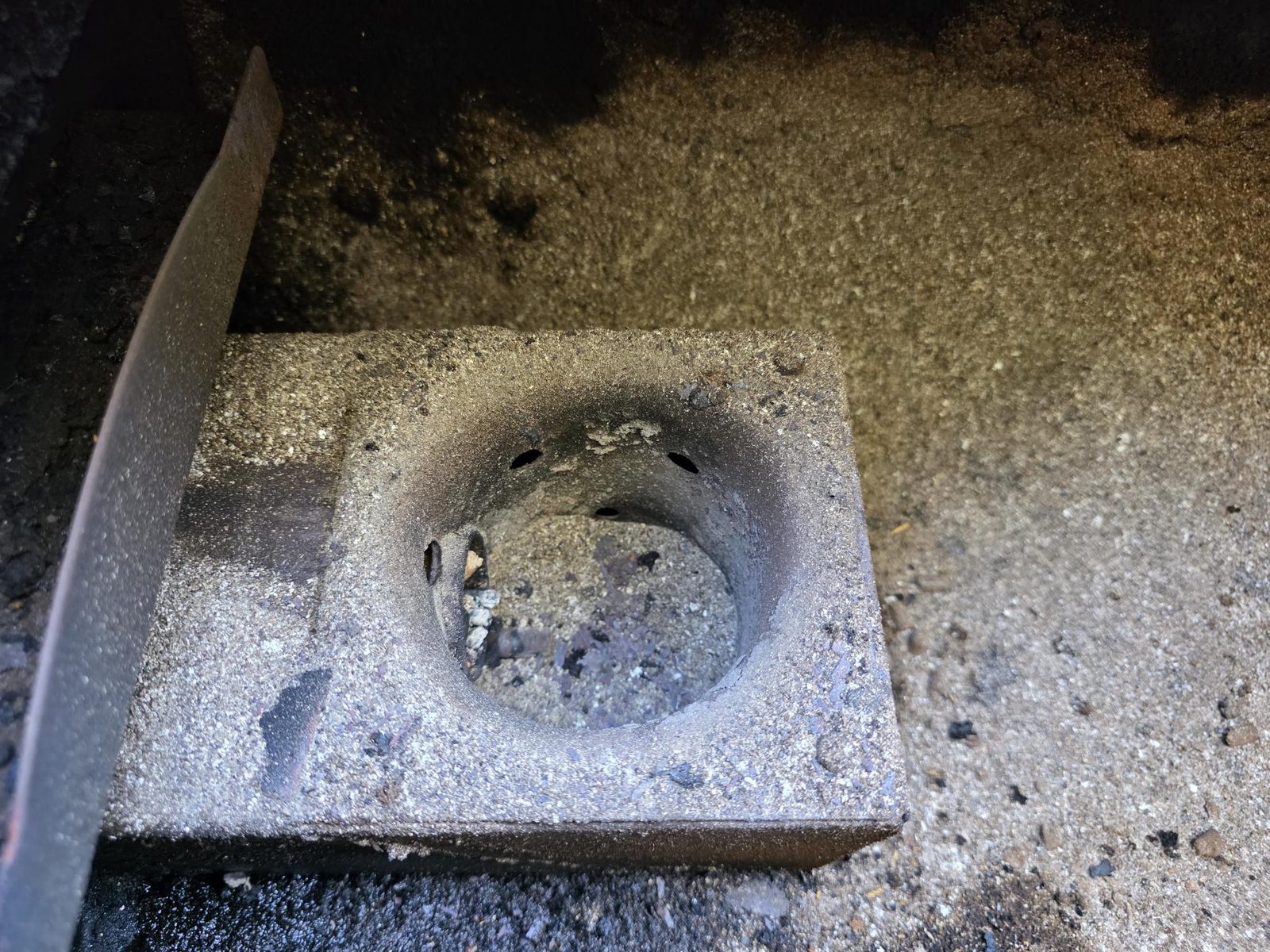
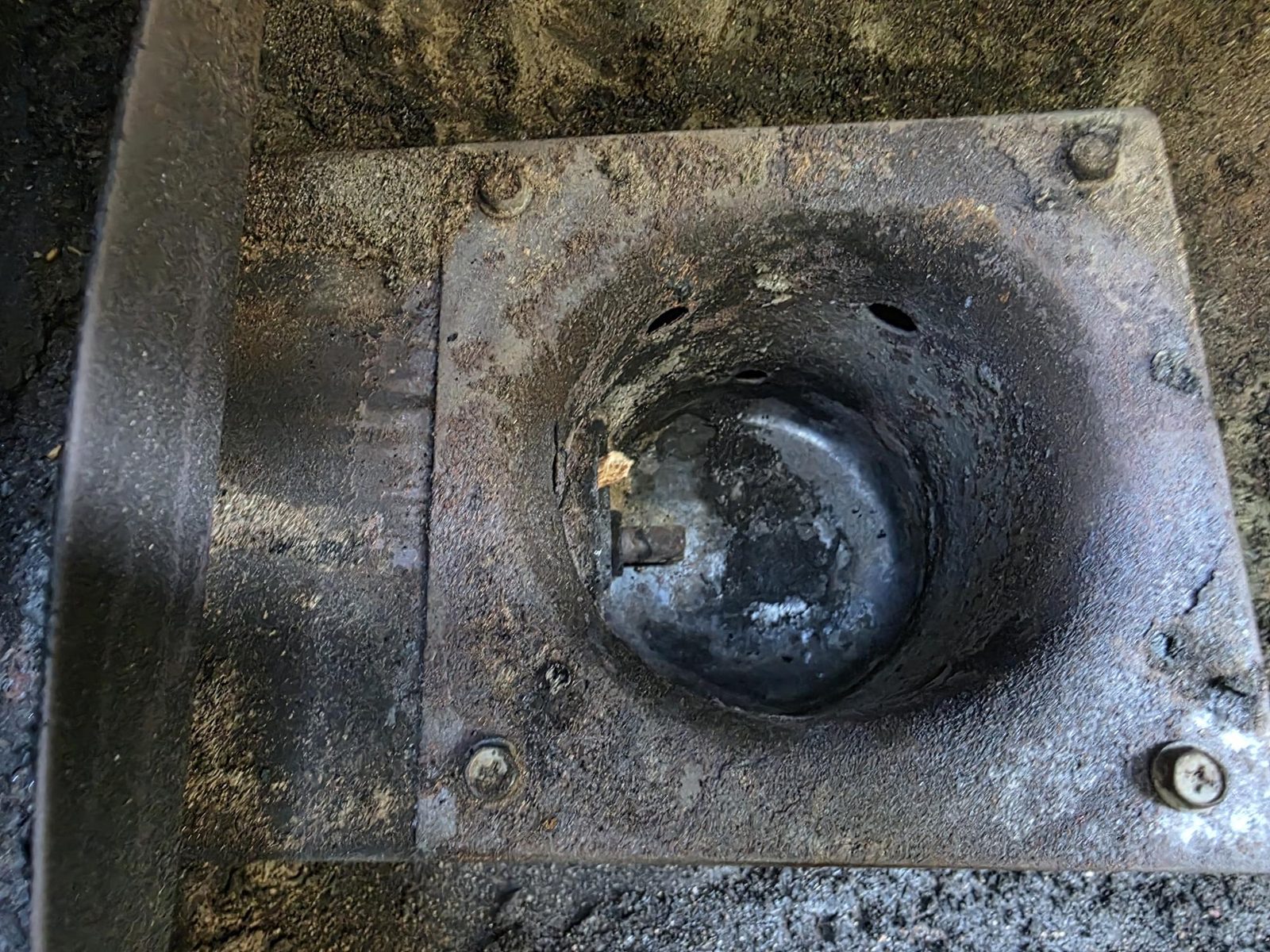
- Empty and inspect the burn pot. Vacuum out all ash and unburnt pellets. Look for warping or scorching that goes beyond normal use.
- Scrape the grease channel and empty the bucket. This is the step people skip. Do not skip it.
- Check the barrel for fire damage. Discolored metal, bubbled paint, or melted wiring insulation all point to a grease fire having happened, possibly one you did not notice.
- Find and clean the RTD probe. Look on the left hand wall of the barrel for a short metal pin sticking out of a small bracket. Wipe carbon buildup off gently. It is a sensor, not a grill grate, so no wire brushes or steel wool.
- Reseat the probe wiring. Trace it back to the control board and make sure the connector is fully seated. Heat cycling works connectors loose over time.
- Clear the chimney and vents. Scrape out built up grease and ash.
- Reassemble and test on the lowest setting. Let it run empty for twenty minutes or so and watch the temperature behave before you trust it with food.
- Only then consider parts. RTD probe first, since it is the cheaper of the two by a long way. Control board last.
One thing before you order a probe: check what actually fits your model. Pit Boss RTDs are not universal, they vary between grills, and the wrong one means a wasted order and another week without a working smoker. Your model number is on the plate on the barrel or in the manual. Match it before you buy.
Is It Really Overheating, or Is the Probe Lying?
This is the single most useful diagnostic you can run, and it is the one most people never do.
Put an independent thermometer in the chamber and compare it against what the controller is reporting. If your Pit Boss says 375°F and a trusted ambient probe says 340°F, you have learned something important. If the controller says 400°F and your probe agrees, the grill really is running hot and you are looking at a fuel or airflow problem, not a sensor problem.
Without that comparison you are guessing, and guessing is how people end up replacing a control board that was working fine the whole time.
Worth repeating something I covered in my rundown of the thermometers I actually use: the lid thermometer that came with your Pit Boss typically reads 20 to 30°F higher than true grate level temperature. That is normal, it is not the same thing as an ErH fault, and it is another reason a real ambient probe earns its place.
For monitoring chamber temperature over a long cook, a leave in probe with a dedicated ambient channel is the right tool.
👉 Check out the ThermoWorks Smoke X4 at ThermoWorks
👉 Or the Inkbird IBBQ-4T on Amazon if you want the budget option
How To Keep It From Happening Again
Almost all of this comes back to grease management. Clean after fatty cooks rather than waiting for a fixed schedule, empty the grease bucket before it has a chance to overflow into the channel, and never restart into a burn pot that is still packed with unburnt pellets.
That covers the essentials. For the full routine, including how often each part actually needs doing and a maintenance schedule you can print and stick on the garage wall, see how to clean a Pit Boss pellet grill.
When To Stop and Call Pit Boss
Contact support if you find melted wiring or heat damage to the electrical components, if ErH keeps coming back after a full cleaning and a probe replacement, or if there is visible warping or structural damage to the barrel or burn pot.
Pit Boss grills carry a warranty, and repeated overheating faults are worth a conversation rather than another parts order. Have your model number and serial number ready before you call.
Frequently Asked Questions
Is ErH dangerous?
The code itself is a safety feature working correctly. What can be dangerous is the grease fire that often causes it. Treat any suspected grease fire seriously: lid closed, power off, no water.
Can I just restart the grill and keep cooking?
You can, and sometimes it will run fine. But if the cause was grease buildup, you are restarting into the same conditions that just triggered it. Clean it first.
What temperature triggers ErH?
There is no single answer. The threshold is programmed into your control board and differs between models. Horizontal grills that sear above 500°F have a much higher ceiling than vertical smokers, which generally are not designed to exceed 400°F. Anyone quoting one universal number is guessing.
Does ErH mean I need a new control board?
Almost never, and it should be the last thing you try. Clean thoroughly, then replace the RTD probe if the code persists. Control boards are expensive and are rarely the actual fault.
Why do I only get ErH at higher temperatures?
That pattern points toward airflow or fuel rather than a dead sensor. At 225°F the grill sheds heat comfortably. Push it to 350°F or higher with a partly blocked chimney and heat accumulates until the board intervenes. Check vents and the chimney first.
Will ErH ruin the food I have on the grill?
Usually not. A short spike is survivable for most cuts. Deal with the grill, then check your internal temps and carry on. If an actual grease fire made contact with the food, that is a different call and worth being cautious about.
The short version: ErH is your Pit Boss protecting itself, and the fix is almost always a bucket, a scraper, and twenty minutes you did not plan on spending. Annoying, but a lot better than a smoker that lets itself cook to death.
Have you hit ErH on your Pit Boss? Drop a comment with your model and what finally sorted it. Troubleshooting threads are only useful when people come back and report what worked, and I would like this one to actually be useful.
🔥 So fire up the pit, and let’s grill and chill.