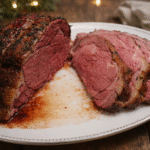
Ever wonder exactly when your steak or chicken is perfectly done? You’re not alone — even seasoned pitmasters rely on internal temps to nail that perfect bite. This quick reference guide takes the guesswork out of cooking and helps you hit the sweet spot every time.
Intro
If you’ve ever overcooked a steak or served chicken that made you second-guess yourself, you’re not alone. Knowing when meat is perfectly done isn’t about luck — it’s about temperature. This quick reference chart takes the guesswork out of grilling and smoking everything from brisket to salmon. Keep this one bookmarked (or printed by the grill) — it’s your new BBQ sidekick.
Why Temperature Matters
You can cook by feel, by time, or by color — but none of those are as reliable as internal temperature. Every cut of meat has its sweet spot where it’s safe, juicy, and packed with flavor. Undercook it, and you risk more than just flavor; overcook it, and all that effort goes up in smoke. Once you start cooking by temperature, you’ll never look back.
Meat Doneness Temperature Chart
Doneness
Target Temp (°F)
Notes
Beef (Steaks & Roasts)
Rare
120–130
Cool red center
Medium Rare
130–135
Warm red center — juicy
Medium
135–145
Pink center, firmer texture
Medium Well
145–155
Light pink, more firm
Well Done
155+
Fully browned — rest well
Ground Beef
Fully Cooked
160
Always to 160°F
Pork (Chops, Tenderloin, Roasts)
Slightly Pink
145
USDA safe; rest 3–5 min
Ground Pork
Fully Cooked
160
Always to 160°F
Chicken & Turkey
Safe/Done
165
Check thickest part; avoid bone
Duck (Breast)
Medium Rare
135–140
Pink center; don’t overcook
Fish (General)
Flaky/Done
145
Flakes easily with fork
Salmon / Tuna (Steak Style)
Medium Rare
120–125
Slightly translucent center
Lamb (Steaks & Chops)
Medium Rare
130–135
Tender and juicy
Medium
135–145
Slightly pink center
BBQ Roasts (Probe Tender)
Done When Tender
195–205
Cook to feel; collagen melted
Pro Tips for Perfect Results
Always check the thickest part of the meat — avoid touching bone or fat.
Pull meat a few degrees before your target temp; it’ll rise while resting.
Let large cuts rest 10–30 minutes to reabsorb juices.
Keep a good thermometer handy — it’s the best investment you can make.
Tools I Use for Checking Meat Temps
There are a ton of thermometers out there, but these are the ones I actually use and trust around the pit. Each has its place depending on what you’re cooking.
🔹 Thermapen Instant-Read Thermometer
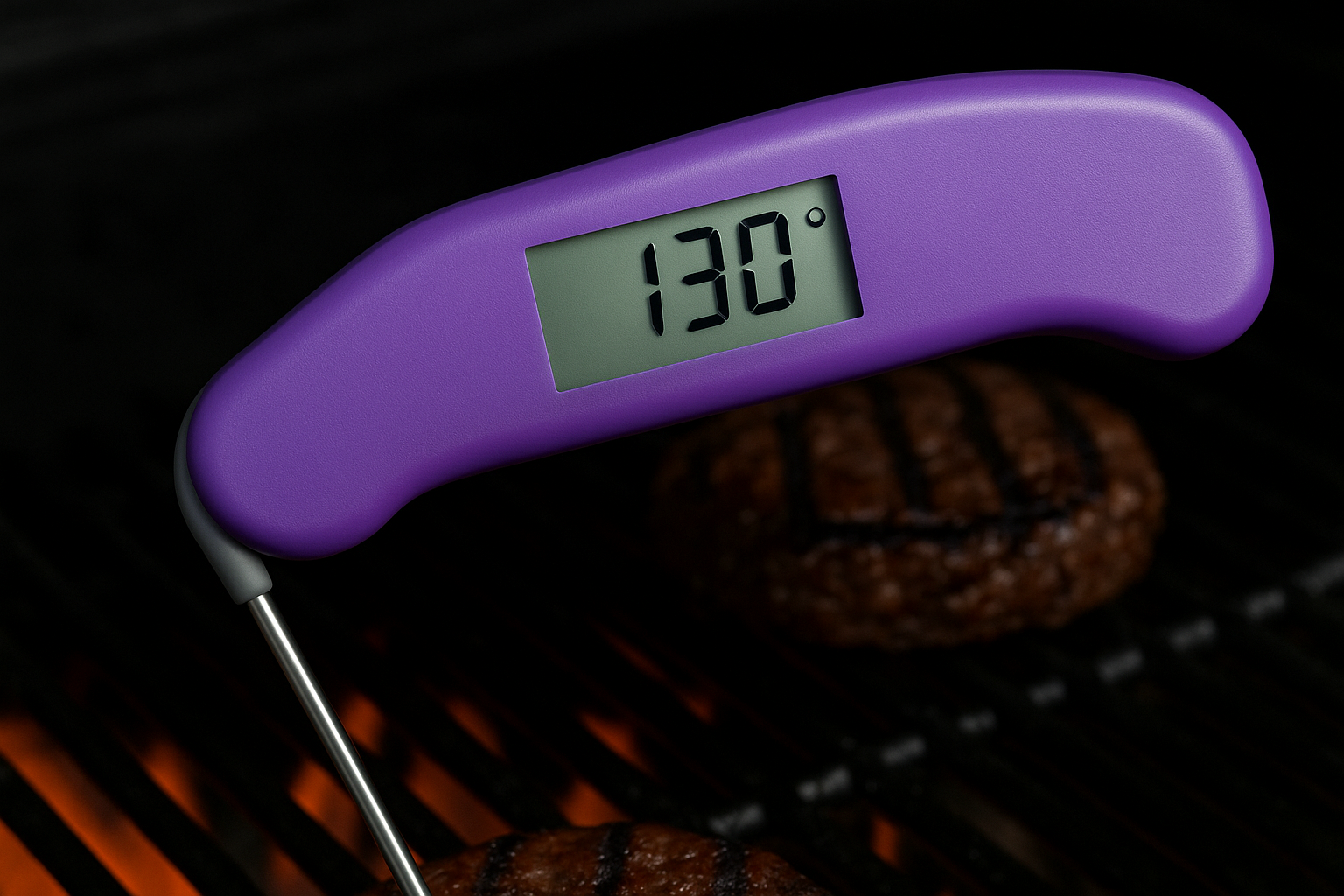
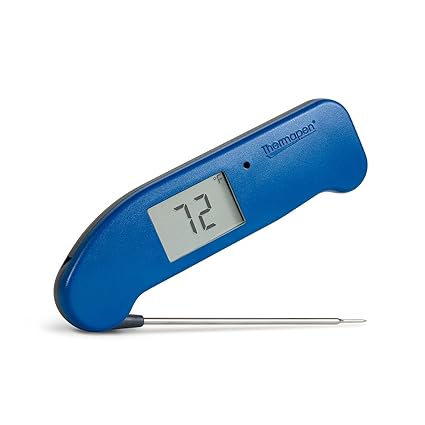
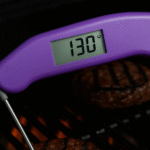
This is my go-to for quick temperature checks. The Thermapen gives you a fast, accurate read in just a couple seconds — perfect when you’re grilling steaks or checking the doneness on chicken or pork chops. I use the purple model, but you can find them in a bunch of colors. If you’re serious about not overcooking meat, this is one tool that’s absolutely worth having.
🔹 Inkbird Wireless Thermometer (Wired Probes)
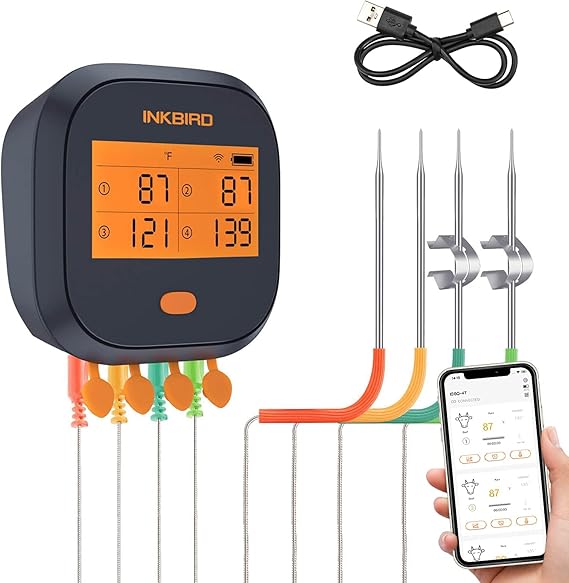
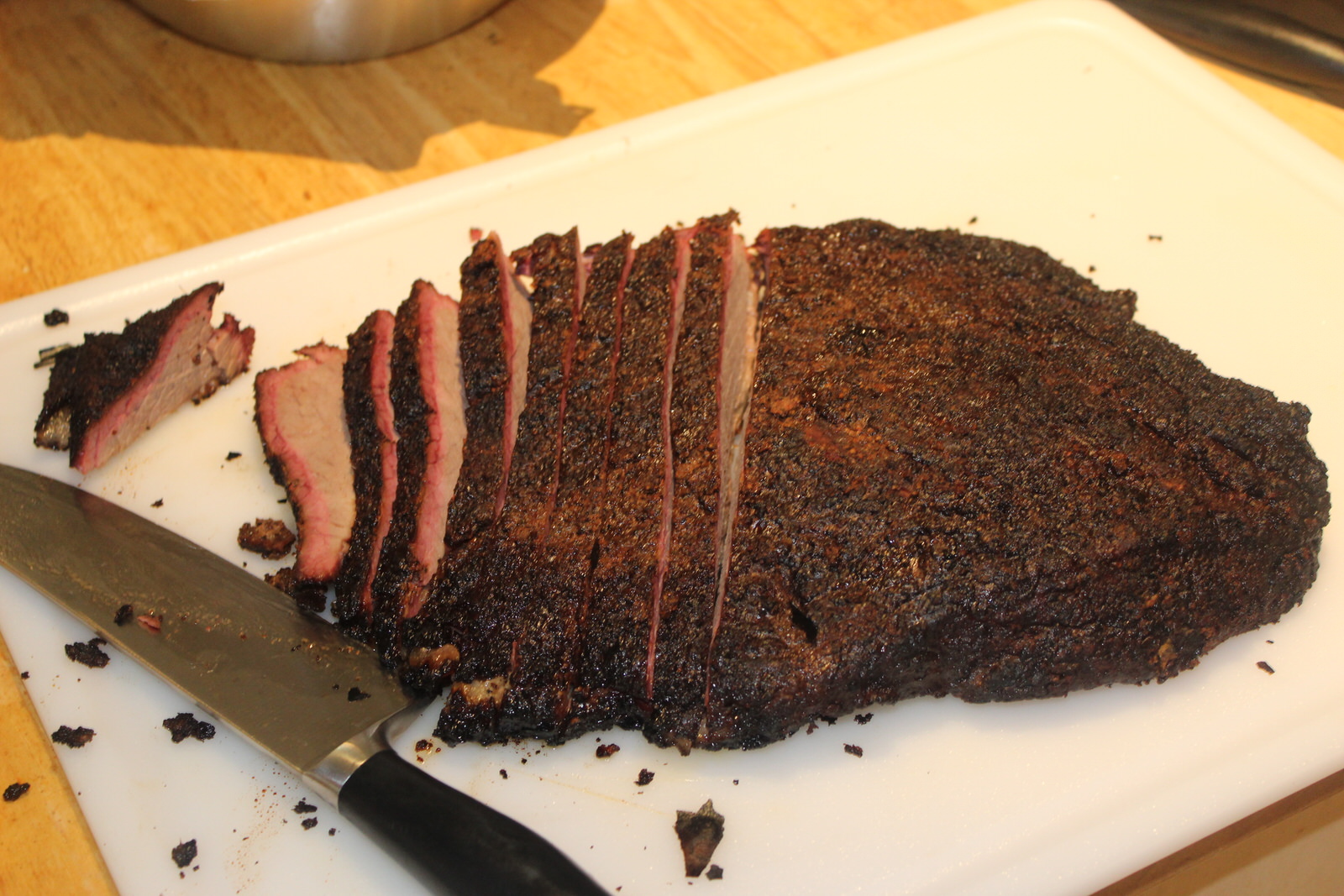
When I’m doing longer cooks like brisket, pork butt, or ribs, I use my Inkbird wireless thermometer with wired probes. It connects to a control unit that syncs wirelessly with your phone, so you can monitor temps from inside the house — a lifesaver during winter cooks.
This one works great and is very reliable, but I’ll be honest — the wires can get a little annoying. When you’re moving meat around on the smoker, the cords can tangle or get in the way, and cleanup and storage take a bit of patience. Still, it’s a solid and budget-friendly choice for longer cooks.
🔹 Inkbird Fully Wireless Thermometer
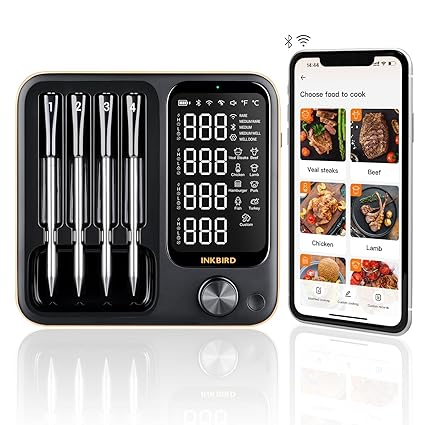
This newer Inkbird model fixes that one big pain point — no wires at all. Each probe is completely wireless, which means setup and cleanup are way easier, and you don’t have to worry about snagging cords while turning meat or wrapping briskets. It’s a bit more expensive, but that convenience can make a big difference if you use your smoker often.
Final Thoughts
Print it, pin it, or keep it open on your phone — this guide will make every cookout more predictable and a whole lot tastier. Once you get comfortable using internal temps, you’ll never need to cut into your meat “just to check” again.